
Corporate Green Recognition Programme
Recognise your people with trees on your company's own tree lot.
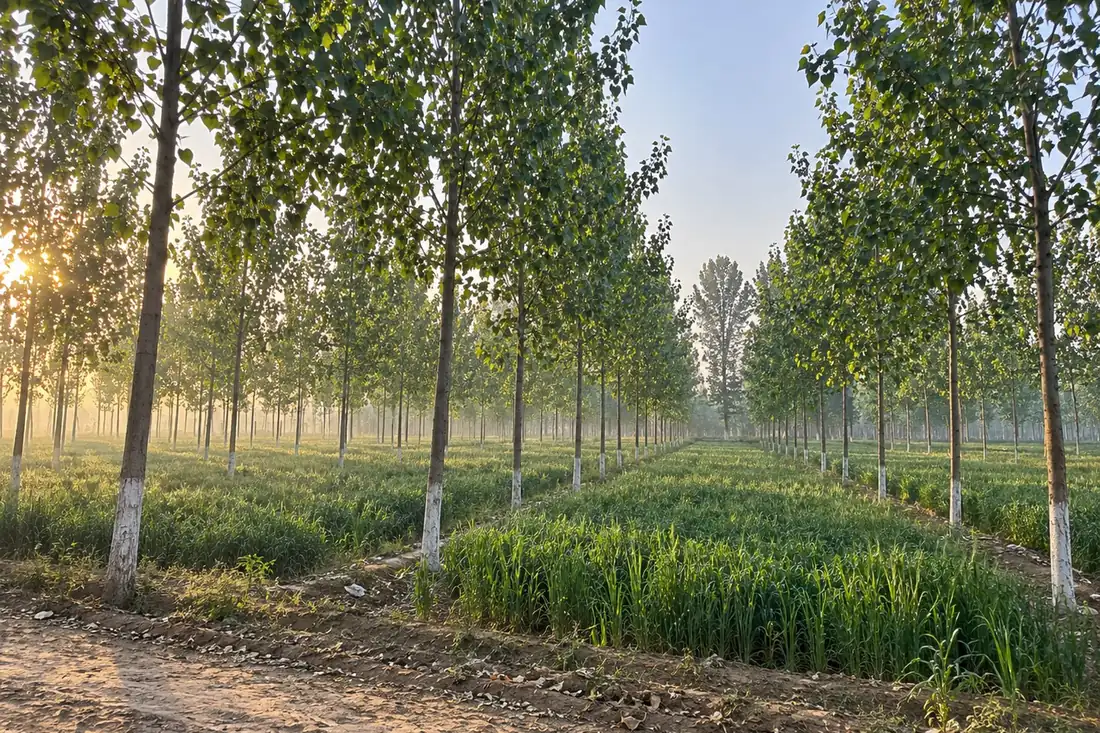
NKAF plants and cares for trees on a marked lot for your company, on our family farm in the Rohilkhand region of Uttar Pradesh. Each tree can be dedicated to an employee milestone.
- Since 1957Our family has farmed in Rohilkhand
- 10,000+Trees under NKAF's care today
- Every treeGeo-tagged with its own ID
- 6 yearsOne agroforestry tree cycle
How it works
Sign for a tree lot
A marked lot on our farm, sized to your milestones, under one registered agreement.
NKAF plants and cares
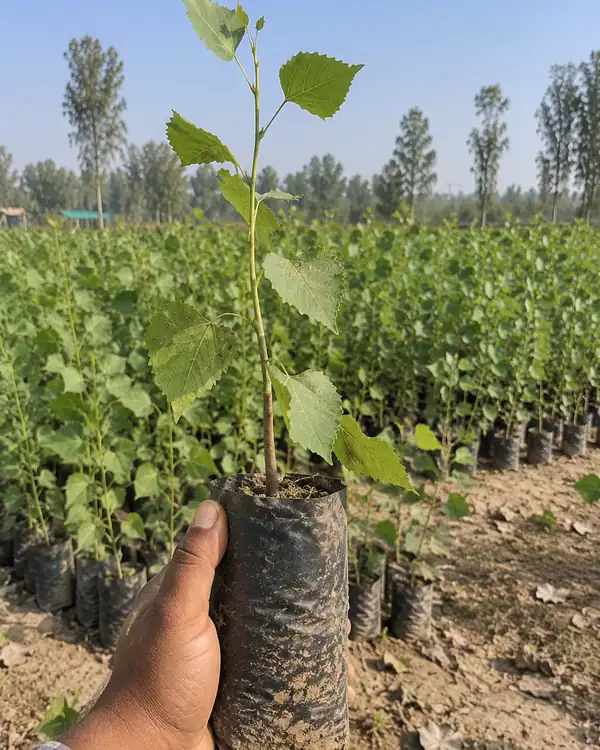
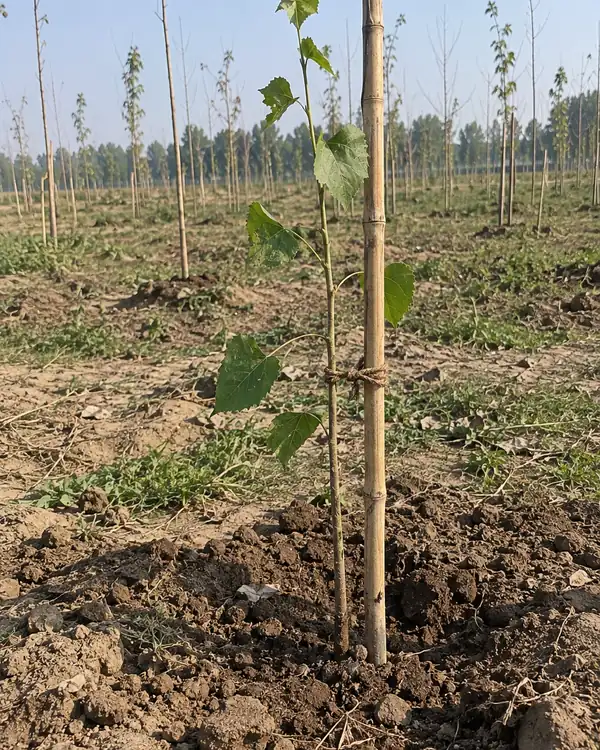
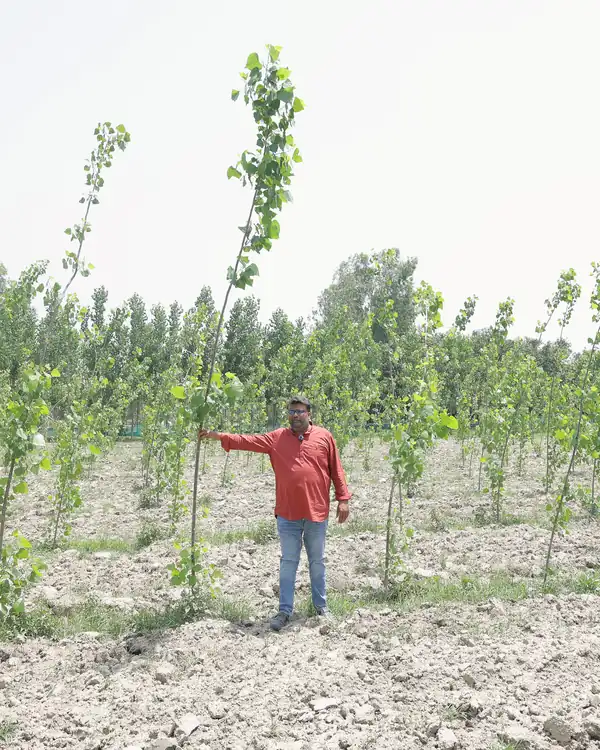
Poplar is planted and geo-tagged, then watered, protected and pruned for six years, with seasonal crops between the rows.
Dedicate trees
Your HR team chooses the milestones. We issue a Green Recognition Certificate within 30 days.
Follow the growth
Quarterly reports with photos, an online view of your lot, and visits with notice.
Decide at the end
The trees are harvested when they mature, and your company decides how they are used. Add a new lot each year.
Who does what
Your company
- Owns the trees on its tree lot
- Sets its recognition policy and milestones
- Inspects at any time, with notice
- Decides what happens at the end of the cycle
NKAF
- Provides the land under its registered leases
- Plants, cares for and protects the trees
- Geo-tags every tree and reports every quarter
- Issues the recognition certificates
Your employees
- Are honoured for a milestone
- Receive a certificate and a view of the tree dedicated to them
- Are welcome to visit the farm
- Own nothing and pay nothing
What your people receive
A certificate in their name, a link to a photo and map of the tree dedicated to them, updated every year, and an invitation to visit the farm.
We give your company a short note for employees that explains the six-year cycle, including the harvest. Taking part is optional.

Green Recognition Certificate
In recognition of [Name]'s [milestone], poplar no. [Tree ID] has been dedicated by [Company] in its tree lot in the Rohilkhand region of Uttar Pradesh. It is grown and cared for by NKAF, appointed by [Company], as part of a six-year agroforestry tree cycle.
The six-year agroforestry tree cycle
Photos from our farm.
 Nursery
 Planting
 Years 1–2
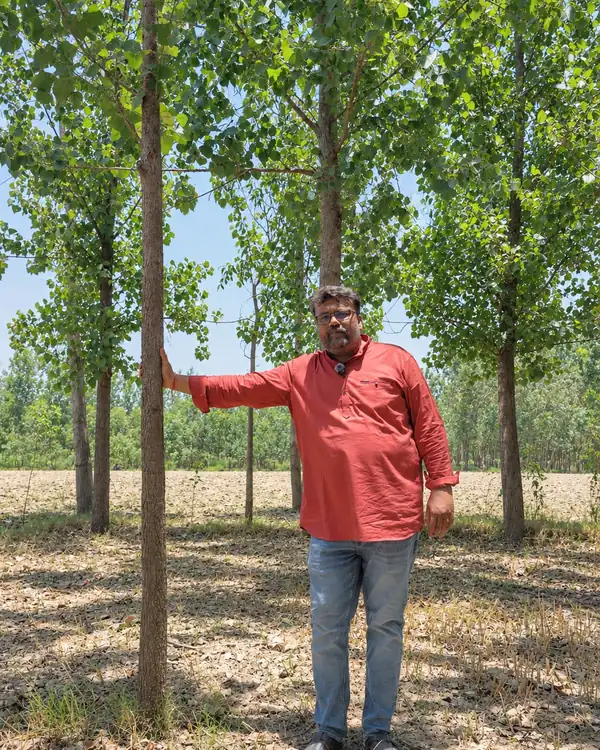 Years 3–4
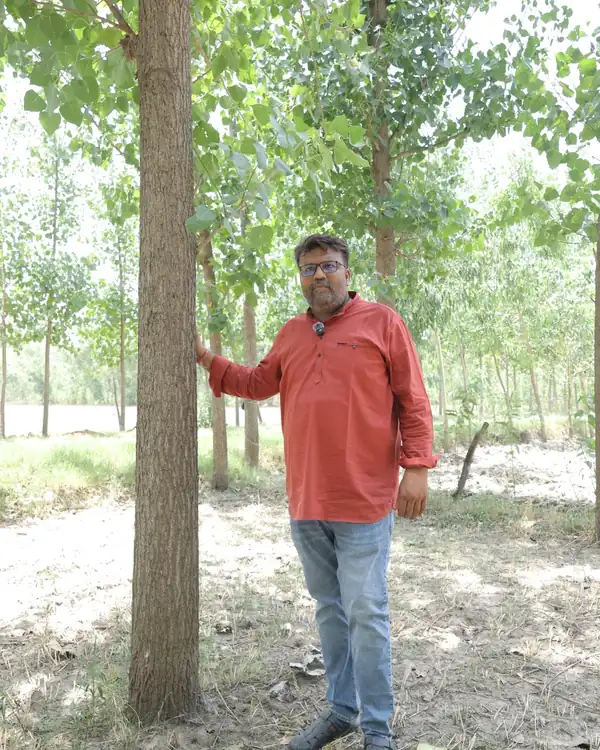 Years 5–6
The tree at harvest, and the market
What a six-year poplar looks like, and how poplar wood is sold.
- Height
- about 15 m
- at about six years, grown with a field crop
- Girth
- about 60 cm to 1 m
- around the trunk at chest height, at six to eight years
- Weight
- about 3 quintals
- about 300 kg of wood a tree at maturity; NKAF's planning figure
How poplar is sold
- By weight, at a rate per quintal (100 kg)
- To plywood mills, at timber markets, or to buyers who come to the farm
- The buyer weighs the logs; your company or its representative may be present
- Rates in Uttar Pradesh are often ₹250–350 a quintal lower than in Haryana
Each dot is a published rate; a vertical bar shows a range; the dashed line only joins years with no report. For comparison, the Uttar Pradesh average in April 2026 was ₹1,000–1,250.
The three lines on the right are what-if pictures to 2030, not a forecast and not a promise. Higher (₹1,750): demand for wood keeps growing (studies expect India's wood use to rise about 70% by 2030) and wood stays short. Middle (₹1,450): rates stay near today's level. Lower (₹1,100): the record number of trees planted since 2022 reach the market together and rates fall back to about the early-2022 level. Rates have moved outside such lines before, and can again; Uttar Pradesh rates are usually lower.
Sources for these figures
- Height and girth at six years: Singh and others, Agroforestry Systems, 2019 (15.2 m tall, 18.75 cm across the trunk, about 59 cm girth).
- Girth of about 1 m at six to eight years: Bangarwa and Hooda, FAO APANews, 2005.
- Rates: Dhiman, CIFOR-ICRAF, 2024 (2017 low); The Tribune, 13 Apr 2022 and 15 Dec 2024; TreeKisan, 14 Apr 2026 (Haryana and UP averages).
- What-if lines: NKAF's reading of the market, drawing on Dhiman 2024 (price cycles and record planting since 2022), ITTO 2021 and EAC-PM 2024 (wood demand to 2030) and IMARC (plywood market growth).
- Weight per tree: NKAF's own planning figure for a mature tree; actual weight varies with growth and is measured by the buyer.
What your company receives
- One registered agreement for your tree lot and our care, with the landowner's consent given by registered deed
- A lot map with GPS corners, and a list of every tree with its ID
- Quarterly reports on photos, survival and growth
- The right to leave early and take your trees, at charges fixed when you sign
- At the end of the cycle the choice is yours; if you sell, the buyer pays your company directly
What it is, and what it isn't
It is
- A recognition programme built on your company's own trees
- A working agroforestry crop; the trees are harvested at the end of the cycle
- Open to checking: geo-tags, reports, visits
It isn't
- CSR: it does not qualify under the CSR Rules, because it benefits your own employees. How you budget for it is for your finance team
- A financial product: no price or outcome for the trees is promised
- An environmental claim: we make no carbon or offset claims
- Ownership for employees: they are honoured, not given trees
Cost
Per unit of 50 trees, at today's rates.
- Saplings
- ₹2,500
- ₹50 a tree, once at planting
- Care
- ₹15,000 a year
- ₹300 a tree, billed quarterly in advance
- Six-year total
- ₹92,500
- Plus GST as applicable and lot set-up
From a pilot to a full programme
A pilot starts at 50 units. Larger programmes are planned lot by lot, at the same rates.
| Units | Trees | Saplings (once) | Care each quarter | Care each year | Six-year total |
|---|---|---|---|---|---|
| 50 Pilot | 2,500 | ₹1,25,000 | ₹1,87,500 | ₹7,50,000 | ₹46.25 lakh |
| 100 | 5,000 | ₹2,50,000 | ₹3,75,000 | ₹15,00,000 | ₹92.50 lakh |
| 250 | 12,500 | ₹6,25,000 | ₹9,37,500 | ₹37,50,000 | ₹2.31 crore |
| 500 | 25,000 | ₹12,50,000 | ₹18,75,000 | ₹75,00,000 | ₹4.63 crore |
| 1,000 | 50,000 | ₹25,00,000 | ₹37,50,000 | ₹1.50 crore | ₹9.25 crore |
One unit is 50 trees: ₹2,500 for saplings once, and ₹15,000 a year for care. Six-year totals are rounded. The care fee reflects that NKAF grows and keeps its own seasonal crops between the rows; a lot without them is priced higher. Harvest handling and lot set-up are quoted in your written proposal.
Questions your team will ask
HR
Which milestones work best?
Forward-looking ones: joining, confirmation, promotion, work anniversaries and awards. We help you set how many trees each milestone gets. We do not do memorial dedications.
Our people work far from Uttar Pradesh. Will this feel real?
Each person gets a link to a photo and map of the tree dedicated to them, updated every year, and is welcome to visit. A team visit can be part of your launch.
What if an employee leaves?
They keep their certificate. Their name comes off your company's views, and they can ask us to delete their details.
How much work is it for HR?
A short list of names when milestones happen. We issue certificates within 30 days and send one combined invoice each quarter.
Finance
How is it billed?
Saplings once, at planting. Care quarterly in advance, so only one quarter is ever paid ahead. GST as applicable.
What happens at the end of the cycle?
The trees are harvested when they mature. Your company decides whether to sell or use them. If you sell, the buyer pays your company directly. NKAF can act as your agent, charged per quintal handled at rates fixed in the agreement, never a share of the sale price.
Can we leave early?
Yes, at any time with notice. You take your trees, or sell them yourself, and pay the land-use, felling and restoration charges fixed when you sign.
Legal
Who owns the trees?
Your company. The agreement will say so expressly, and the landowner will confirm it in a registered consent deed.
What do we sign?
One registered agreement covering your tree lot and our services, and a short supplement for each new lot you add.
Can we check the land?
Yes. Before you commit, we share the land papers, a title report and the lease and consent documents, so your own lawyers can verify them.
What if something goes wrong?
The agreement sets out care standards, free replacement of saplings in the first 18 months, insurance options and remedies on both sides. NKAF's liability for a lot is capped at one year's care fee.
Start with a pilot
Start at 50 units (2,500 trees). Add more when you are ready, up to 1,000 units and beyond.
- A 20-minute call about your goals and milestones
- A farm visit to see your proposed tree lot
- A written proposal with the lot, the rates and the timeline